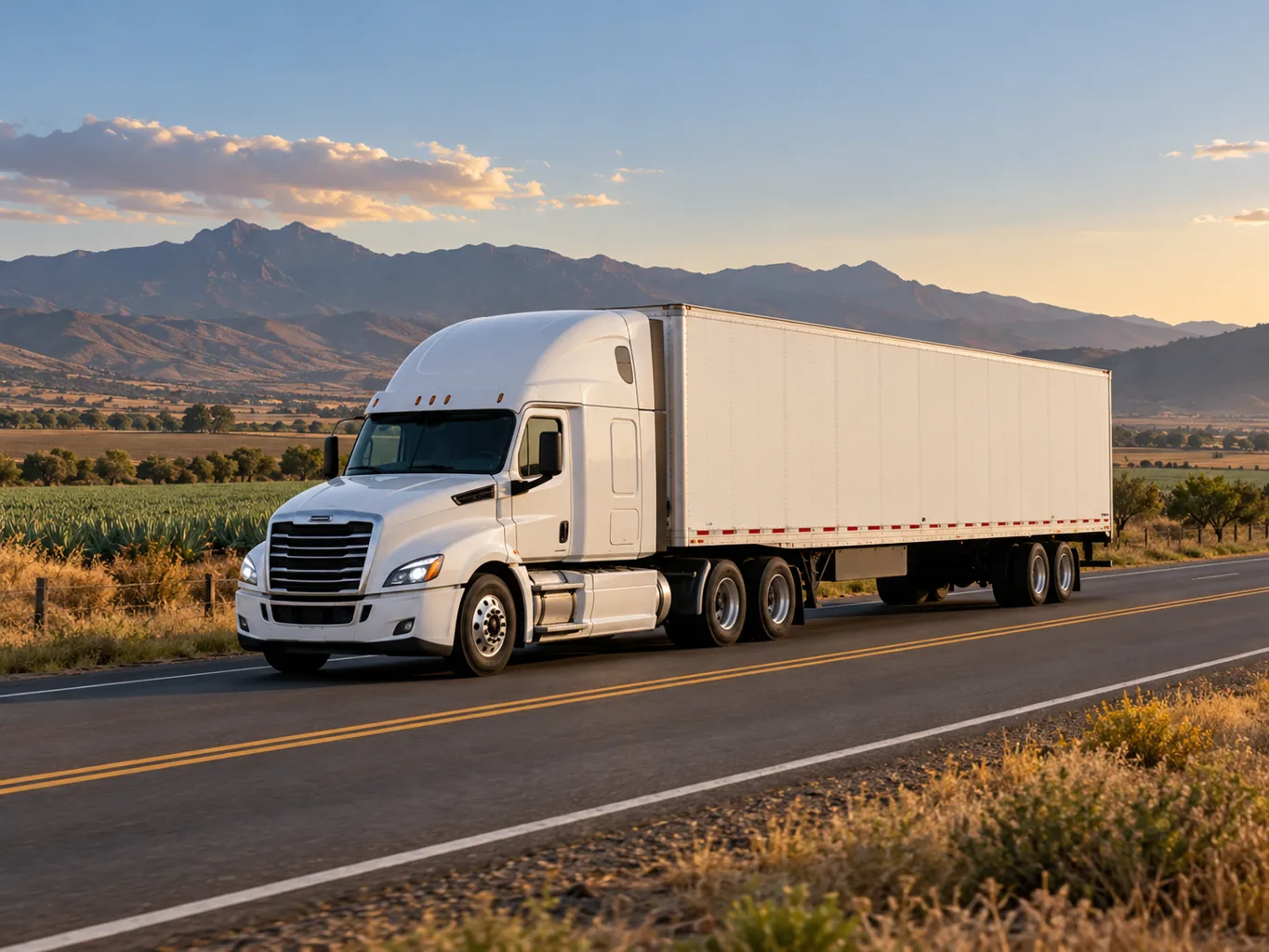
Picture a January morning on a farm in Sinaloa. The harvest is ready to go and the clock is ticking: much of the season’s business depends on that product arriving on time. What comes next is not just a trip. It is a chain of decisions that starts long before the truck turns on its engine.
Trucks Move More Than You Think
In 2024, trucking moved 572 million tons of cargo in Mexico, 58.3% of all goods carried across the different modes. In trade with the United States it weighs even more: more than 70% of the exchange by value traveled by road that year, according to SICT and U.S. transportation statistics. Put simply, if your product crosses the border, it most likely does so on wheels.
The Logistics WorldNogales, the Gateway of the West
For fruit and vegetables coming from western and northwestern Mexico, Nogales, Arizona, is a key entry point. A University of Arizona study describes it as a top U.S. port for fresh fruit and vegetables from Mexico, the country’s leading source of imported fresh produce, with Sonora, Sinaloa, Nayarit and Jalisco as supply areas.
University of ArizonaThe numbers help size it up: in 2021, imports of Mexican fruit and vegetables through the Nogales district ports exceeded $3.86 billion. Geography explains the rest: the Nogales-Mariposa port is the northernmost access point of the highway running through West Mexico to the United States. Among vegetables, tomatoes and cucumbers account for about 40% of the value entering through Arizona ports.
The PackerThe Farmland Behind This Route
Sinaloa is one of its main players. According to SIAP’s 2017 Agrifood Atlas, the state is a national leader in grain corn and protected agriculture. It is the starting point of much of what moves along this route, which is why logistics from the field to the border matters as much as the harvest itself.
SIAP · Atlas 2017What Decides Whether Cargo Arrives Well, Beyond the Miles
Before hiring an agricultural carrier, these five questions help more than any quote:
- What type of unit will be used, and is it right for my product, dry or refrigerated?
- Who will be my contact, and how will they keep me informed?
- How are loading times and the delivery window coordinated?
- What evidence of delivery will I receive?
- How and when will I be told about a delay or an unexpected issue?
How We Do It at Amber Logistics
From Culiacán, Sinaloa, we move dry agricultural cargo and have capacity for refrigerated loads, on a route that runs from Guadalajara to Sonora and the Nogales crossing. Every client has a direct contact, and follow-up is by phone call and WhatsApp.
If you have cargo to move, tell us what, where and when. We reply to quote requests in 1 to 2 hours, Monday to Friday, 8 a.m. to 6 p.m.
Let’s TalkSources: The Logistics World (federal trucking data, SICT), University of Arizona Cooperative Extension, The Packer, Produce Business and SIAP.